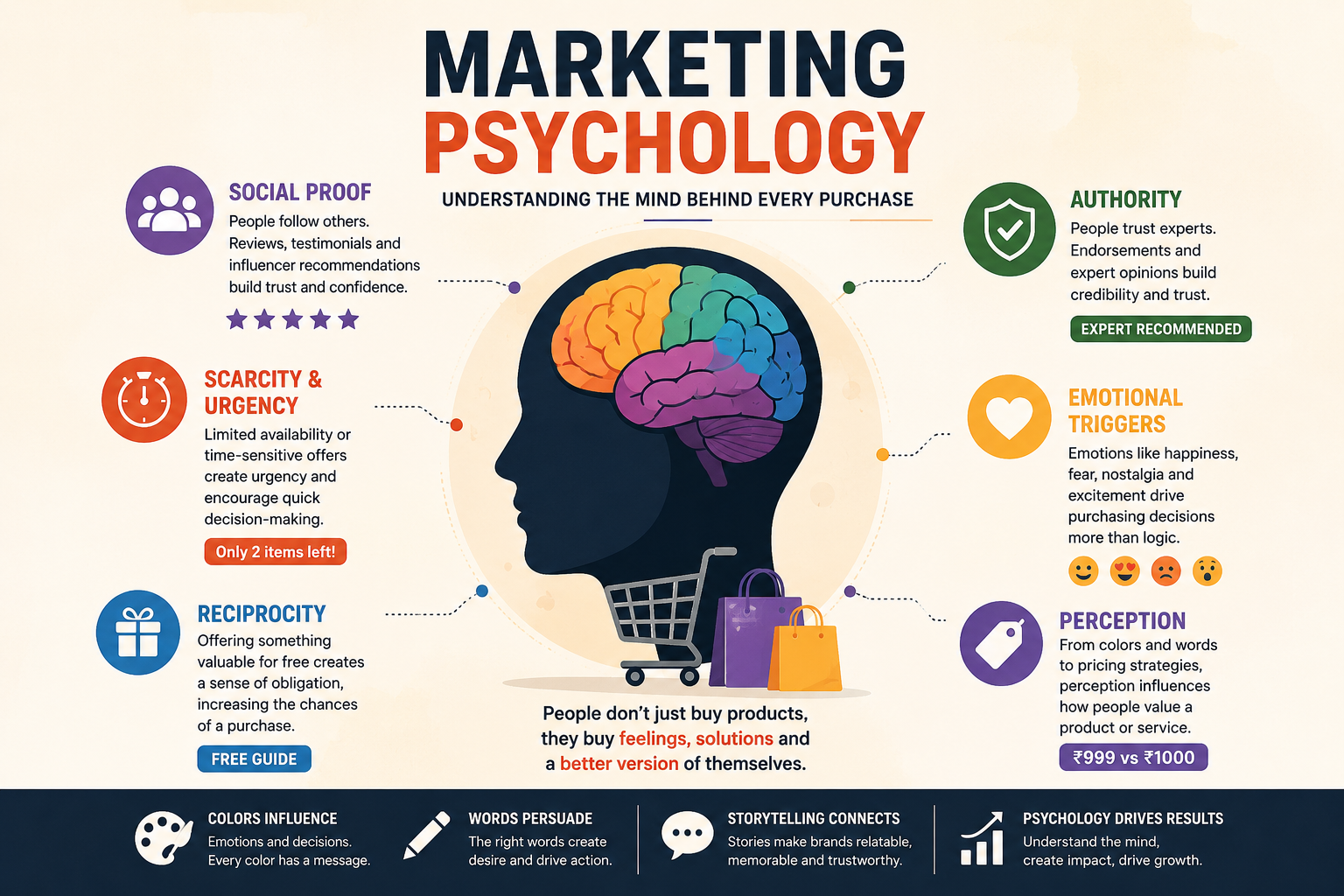
In today’s competitive world, marketing is not just about promoting a product or service. It is about understanding people — how they think, feel, and make decisions. This is where marketing psychology plays a powerful role.
Marketing psychology is the study of how human behavior influences buying decisions. It helps brands connect with their audience on a deeper level, making their strategies more effective and impactful.
Why Marketing Psychology Matters?
Every purchase decision is emotional before it becomes logical. People may justify their choices with facts, but emotions drive the action. When brands understand this, they can create campaigns that truly resonate with their audience.
For example, a customer doesn’t just buy a skincare product. They buy confidence, self-care, and the feeling of looking good. This emotional connection is what marketing psychology focuses on.
Key Principles of Marketing Psychology
- Social Proof
People tend to follow others. When they see reviews, testimonials, or influencers using a product, they feel more confident in making a purchase. This is why brands showcase customer feedback and ratings. - Scarcity and Urgency
When something is limited, it becomes more valuable. Offers like “Only 2 items left” or “Sale ends tonight” create a sense of urgency, pushing customers to act quickly. - Reciprocity
When brands offer something valuable for free — like a guide, trial, or discount — customers feel a natural urge to give back, often by making a purchase. - Authority
People trust experts. When a brand is endorsed by professionals or presents itself as knowledgeable, it builds credibility and trust. - Emotional Triggers
Fear, happiness, excitement, and even nostalgia can influence buying decisions. Successful marketing campaigns often tap into these emotions to create a strong impact.
How Brands Use Marketing Psychology
Brands use colors, words, and design to influence perception. For instance, red creates urgency, blue builds trust, and minimal design gives a premium feel. Even pricing strategies like ₹999 instead of ₹1000 are based on psychological principles.
Content marketing also plays a role. Storytelling helps brands connect emotionally, making their message more memorable and relatable.
Final Thoughts
Marketing psychology is not about manipulation. It is about understanding human behavior and creating meaningful connections. When used ethically, it helps businesses deliver value while making it easier for customers to make decisions.
As a beginner in digital marketing, learning marketing psychology can give you a strong advantage. It helps you create content that not only attracts attention but also drives action.
In the end, successful marketing is not about selling products. It is about understanding people.
Leave a Reply