Managing money in your 20s can feel confusing. You are earning, spending, saving, and trying to enjoy life — all at the same time. But the truth is, this is the most important phase to build strong financial habits.
The good news is, you don’t need to be an expert to start. You just need a simple and practical approach.
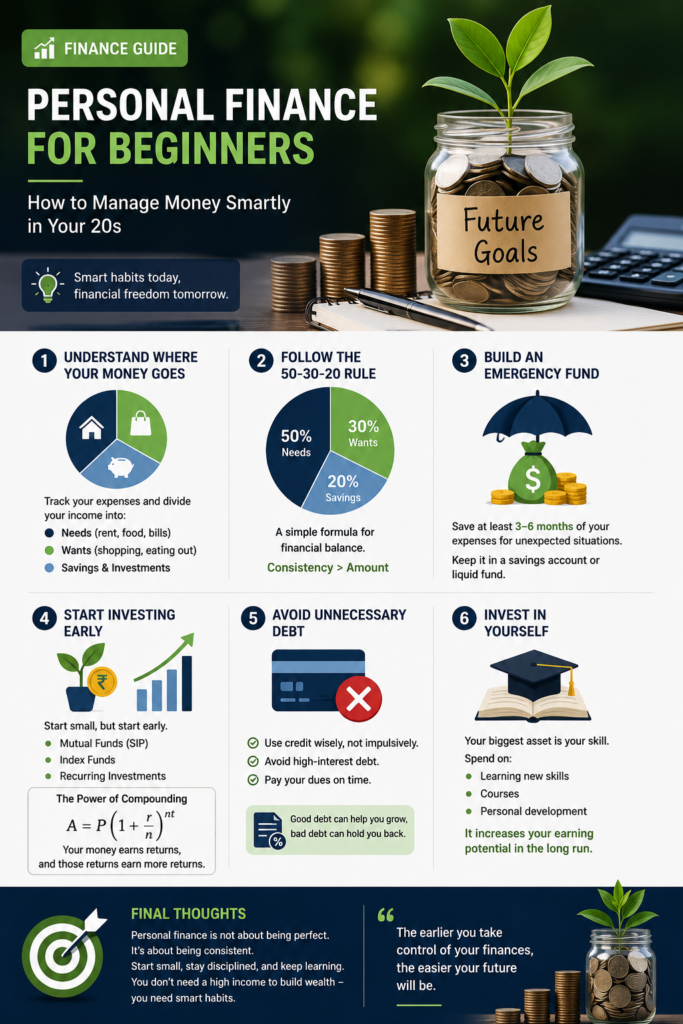
Step 1: Understand Where Your Money Goes
Before saving or investing, track your expenses.
Divide your monthly income into basic categories:
- Needs (rent, food, bills)
- Wants (shopping, eating out)
- Savings and investments
Even a simple note or app can help you understand your spending pattern. Awareness is the first step to control.
Step 2: Follow the 50-30-20 Rule (Simple Version)
A beginner-friendly formula:
- 50% for needs
- 30% for wants
- 20% for savings
If your income is limited, even saving 10% is a great start. Consistency matters more than amount.
Step 3: Build an Emergency Fund
Life is unpredictable. Medical expenses, sudden travel, or job issues can come anytime.
Start building an emergency fund of at least 3–6 months of your expenses. Keep this money in a savings account or liquid fund so you can access it anytime.
Step 4: Start Investing Early
Many people delay investing because they think they need a lot of money. That’s not true.
You can start with small amounts in:
- Mutual funds (SIP)
- Index funds
- Recurring investments
The earlier you start, the more you benefit from compounding.
Here’s the simple idea behind compounding:
This means your money earns returns, and those returns start earning more returns over time.
Step 5: Avoid Unnecessary Debt
Using credit cards for convenience is fine, but avoid spending money you don’t have.
High-interest debt can quickly become a financial burden. Always pay your dues on time and avoid impulsive borrowing.
Step 6: Invest in Yourself
Your biggest asset is your skill.
Spend money on:
- Learning new skills
- Courses
- Personal development
This will increase your earning potential in the long run.
Final Thoughts
Personal finance is not about being perfect. It is about being consistent.
Start small, stay disciplined, and keep learning. You don’t need a high income to build wealth — you need smart habits.
The earlier you take control of your finances, the easier your future will be.
Leave a Reply